Pakistan’s AI Problem Isn’t Technology. It’s Discipline.

Before AI can deliver value, organizations must fix their data, processes, and systems — the real work most are avoiding.
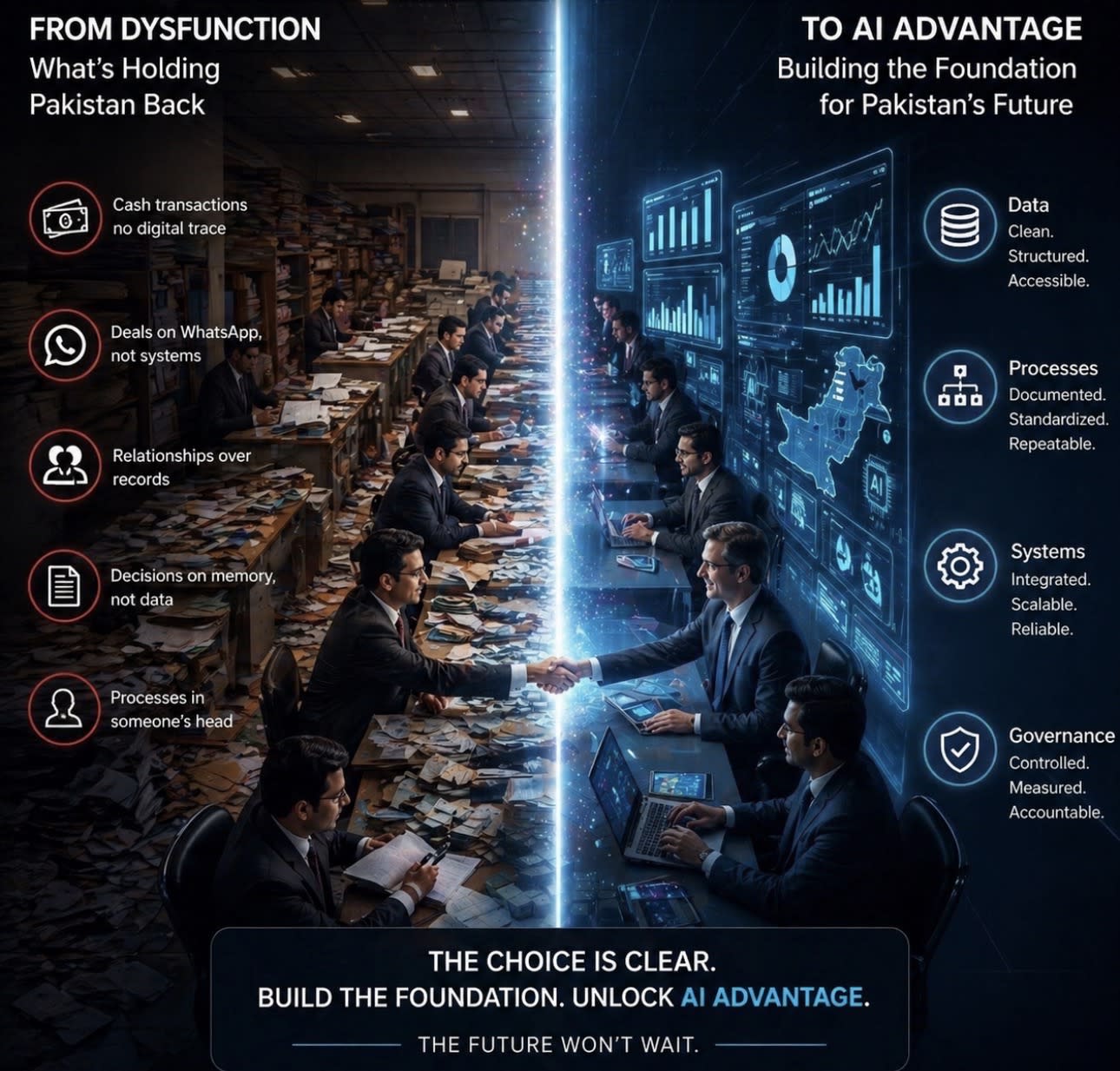
Everyone is asking which AI tool to use. Very few are asking if they’re ready for it.
Not because AI is a risk.
But because it brings clarity — quickly and at scale.
AI has a way of highlighting what already exists:
gaps in data, inconsistencies in processes, and reliance on informal ways of working.
And if we reflect honestly, many organizations are still navigating challenges such as:
• Limited digital traceability of transactions
• Decisions influenced more by experience than structured data
• Critical processes that are not fully documented
• Operational reliance on informal communication channels
• Systems that are not yet fully integrated
This is not unusual for a developing market.
But it does define the starting point.
Globally, organizations seeing real impact from AI did not begin with advanced models.
They invested early in the fundamentals — often quietly:
• Building reliable data pipelines
• Standardizing and documenting processes
• Strengthening governance and system integration
These are not headline initiatives.
But they are what make AI work.
So the leadership question is shifting.
Not:
“Which AI solution should we implement?”
But:
“Are we ready, as organizations, to support AI with the right foundations?”
Because without that, AI remains a pilot — not a capability.
𝗧𝗵𝗲 𝗻𝗲𝘅𝘁 𝗽𝗵𝗮𝘀𝗲 𝗼𝗳 𝗮𝗱𝘃𝗮𝗻𝘁𝗮𝗴𝗲 𝘄𝗶𝗹𝗹 𝗻𝗼𝘁 𝗰𝗼𝗺𝗲 𝗳𝗿𝗼𝗺 𝗮𝗰𝗰𝗲𝘀𝘀 𝘁𝗼 𝗔𝗜.
𝗜𝘁 𝘄𝗶𝗹𝗹 𝗰𝗼𝗺𝗲 𝗳𝗿𝗼𝗺 𝗿𝗲𝗮𝗱𝗶𝗻𝗲𝘀𝘀 𝗳𝗼𝗿 𝗶𝘁.
Where do you see the biggest gap today — data, processes, or organizational alignment?
#Pakistan #AI #Leadership #DigitalTransformation #DataStrategy #BusinessLeadership
Usman Khalil has spent 25 years at the intersection of telecom, fintech and insurance — building systems, leading transformation and turning data into decisions. He writes on risk, technology and the future of financial services across emerging markets.